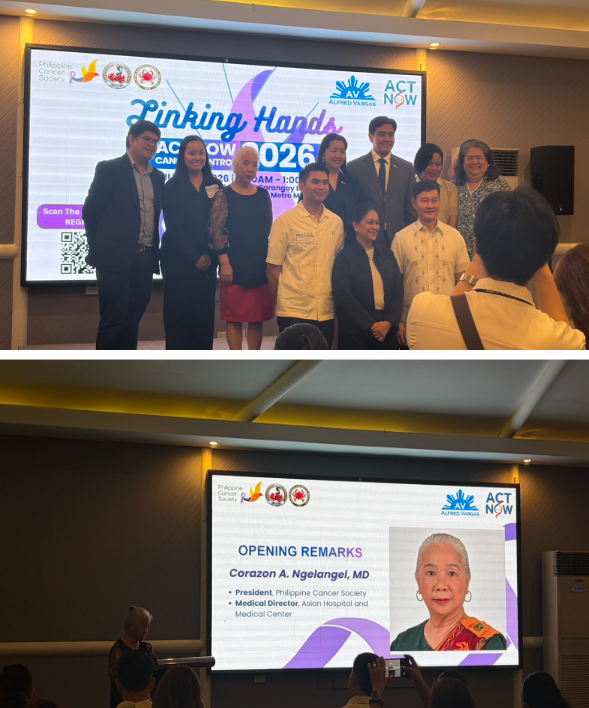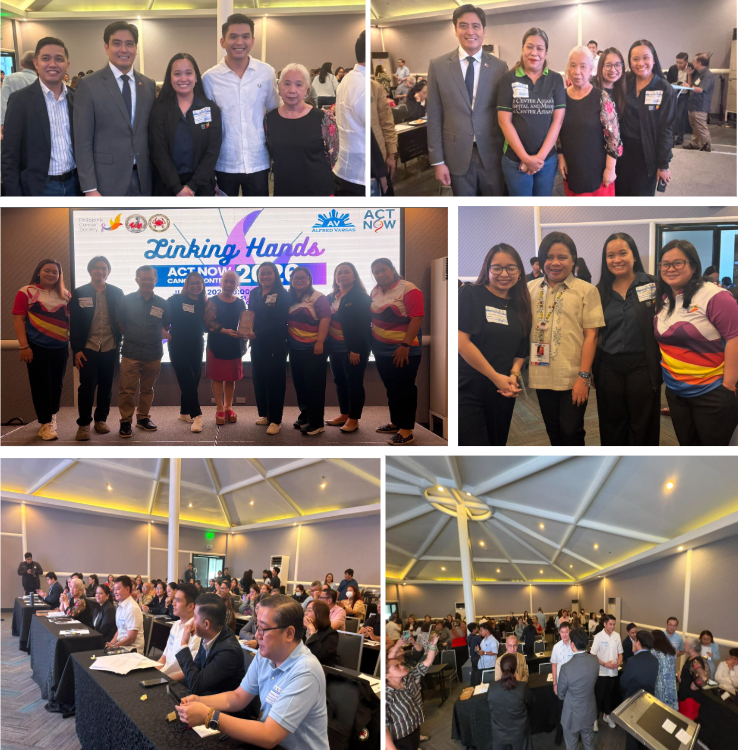

QUEZON CITY, Philippines — Driven by a shared mission to strengthen local health systems and localize the National Integrated Cancer Control Act (NICCA), the Philippine Cancer Society, Inc. (PCS), in a powerful partnership with the Office of Councilor Alfred Vargas III, hosted the landmark ACT NOW Cancer Control 2026: Meeting of Advocates, Medical Leaders and Legislators.
Held on 10 June 2026, at the B Hotel in Diliman, Quezon City, the half-day collaborative summit brought together patient advocates, oncology experts, local government executives, and key national agency leaders. The collective goal: to share technical benchmarks, to map out localized resource pathways and navigation for cancer control in the community, to secure local policy frameworks for the NICCA LGU localization.
Key Highlights and Executive Sessions
1. Driving Local Policy: The Quezon City Benchmark
The event opened with a comprehensive blueprint session by Hon. Alfred Vargas, MPA. Councilor Vargas shared the core development, legislative steps, and institutional impact of the Quezon City Cancer Control Ordinance. Challenging other Local Government Units (LGUs) to take action, Vargas emphasized that a dedicated local ordinance is a foundational shield that guarantees sustainable funding and standardized local care pathways.
Complementing this legislative vision, Ms. Carmen Auste from the Cancer Warriors Foundation shared grounded insights into how the Quezon City Integrated Cancer Control Ordinance functions in real-world environments, directly improving community early detection and patient navigation systems.
2. National Frameworks and NICCA Localization
Ensuring local policies integrate smoothly with national mandates, Lilian M. De Leon, Assistant Secretary for International Relations at the Department of the Interior and Local Government (DILG), delivered an update on DILG's NICCA Localization Efforts. Key developments highlighted include:
- Inclusive Policies: DILG's Memorandum Circular (MC 2022-017) formally includes Cancer and Rare Diseases under the recognized classifications of Disability, opening institutional care vectors.
- Workplace Early Detection: Collaborative organized cancer screening rollouts (in partnership with the DOH and Jhpiego Philippines) providing Human Papillomavirus (HPV) DNA Self-Tests, VIA screenings, and HPV vaccines directly within government workspaces.
3. Streamlining Financial Navigation for Patients
Navigating institutional funds remains a critical hurdle for cancer patients. Representatives from top departments unpacked systemic resource paths:
- Mr. Glenn I. David, RN discussed PhilHealth Coverage Paths: Presentation of the primary care YAKAP Package, introducing structural rates for targeted diagnostics such as mammograms, low-dose chest CT scans, and colonoscopies. PhilHealth also detailed its updated Z Benefits Packages, highlighting the enhanced 2024 Breast Cancer coverage reaching up to Php 1.4 Million, alongside ongoing policy reviews for colorectal, prostate, and cervical cancers.
- Dir. Edwin S Morata, presented DSWD Social Safety Nets: Detailments on the Assistance to Individuals in Crisis Situation (AICS) program as a stop-gap financial mechanism covering medical assistance (chemotherapy, diagnostics, hospital bills) and funeral costs alongside face-to-face and wireless psychosocial support model platforms like WiSUPPORT.
Spotlight on the Philippine Cancer Society, Inc. (PCS)
As the primary co-anchor and core partner to the Office of Councilor Alfred Vargas, the Philippine Cancer Society (PCS) stood at the forefront of the summit, reinforcing its historic legacy of linking medical expertise with legislative willpower.
Dr. Corazon A. Ngelangel, PCS President, delivered the opening remarks - We come together with a shared purpose: to bridge the gap between national cancer policy and meaningful, actionable implementation at the local level. The National Integrated Cancer Control Act provides us with a strong framework, but its true impact depends on how effectively we translate it into programs that reach our patients, families, and communities. This session creates a valuable space for collaboration among the Department of Health, the Department of Social Welfare and Development, our Local Government Units, our colleagues in medical oncology, and patient advocates. By bringing together policy leaders, implementers, clinicians, and advocates, we strengthen our ability to design cancer control strategies that are not only evidence-based, but also practical, sustainable, and responsive to local needs. We respectfully acknowledge and thank each and every one of you – your presence already makes our aims today a success. Today, we aim to exchange knowledge on developing cancer control ordinances, learn from existing models such as the Quezon City experience, and align our efforts in early detection, patient navigation, and financing pathways. More importantly, we hope to foster partnerships that will enable each locality to build resilient cancer care systems. We are especially honored to have QC share the journey and impact of the Quezon City Cancer Control Ordinance. QC demonstrates how strong local governance can translate national policy into real, measurable outcomes for patients. What NICCA under Sections 9, 15, and 16 of RA 11215 and its IRR Actually Requests of LGUs are to: Strengthen primary and community care for cancer prevention and screening, Invest in local health facilities and referral pathways, Ensure cancer case reporting to DOH, Support community-based palliative care, and Participate in inter-local health zones (ILHZs) for cancer referral. These must have a defined compliance enforcement mechanism tied to LGU funding or licensing, with a request that the DILG's Seal of Good Local Governance (SGLG) include such specific NICCA-linked cancer indicators. Let this meeting serve not just as a discussion, but as a catalyst for action. Together, we can ensure that no Filipino is left behind in accessing timely, quality cancer care.
Operational Leadership: The entire flow of the high-stakes summit was steered by Romeo Marcaida, RN, the Executive Action Team Operations Manager for the Philippine Cancer Society. Serving as the Master of Ceremonies and host, Marcaida contextualized the technical data points into actionable insights for the attendees.
Bridging Medical & LGU Collaborations: In the final technical block, Romeo Marcaida delivered an operational briefing on Medical and LGU Collaborations on Ordinance Making and Funding Navigation. Drawing heavily from the benchmark Quezon City experience, PCS showcased practical strategies on how local cancer control ordinances can actively secure local budgets, structure cross-department navigation, and eliminate systemic bottlenecks for the everyday patient.
A Unified Call to Action
The event closed with a joint Call to Action, reminding attendees that the title ACT NOW means local communities cannot afford delayed policies. To create a long-term network, the organizers gathered nominations and interest profiles via a secure QR platform, aiming to establish specialized workgroups for continuous health resource mapping across the country's local government sectors.